7 mental health tips for event planners
Feb. 9, 2021
It’s no secret that planning events is a lot of work, but did you know that the role of event planner is one of the most stressful jobs in the world? With tight deadlines and turn-around times, ever-changing needs, and long work hours, it’s no wonder. Throw in a global pandemic causing added uncertainty and it’s a recipe for burn out.
We as event planners, co-ordinators and managers spend everyday working hard to make things perfect for our clients, but it’s important to take a step back now and then to ensure we’re making things work for ourselves. Your mental health matters. After all, you can’t pour from an empty cup.
1. Ask for help
No one can plan and execute an event alone. It takes a team, and when you’re in charge of that team, that means learning how to delegate. This can be difficult because, as co-ordinators, we usually want to be in control of every detail. Find some items on your list that don’t require your specific skillset and let your team help you. Make sure to plan breaks for yourself throughout the day, especially on days when you’re executing the event, and ask a trusted team member to cover for you while you eat, re-hydrate and rest.
2. Cultivate a team of collaborators
This is a long-term tip since relationships aren’t built overnight, but it’s one that will make your life so much easier. Find the vendors, suppliers and team members that care about your events as much as you do. Collaborators that want to make the event successful and will work together to make your life easier. If you know your rental supplier has great rapport with the catering team, then you don’t have to be constantly present to liaise between the two if there’s not enough flatware. They can sort it out amongst themselves and tell you what their solution will be. Doesn’t it reduce your blood pressure just thinking about it?
3. Practice mindfulness and self-awareness
Remember those breaks we mentioned above? Use some of that time to practice mindfulness. It can be something as simple as a short meditation if that’s what you have time for. Take time to ground yourself in the here and now when things start to feel as though they’re spinning out of control. Self-awareness is another invaluable skill that can help you manage your thoughts and emotions. It involves identifying what you’re feeling, and why you may be feeling it. Did a team member do something that upset you? Try to get to the root of why it upset you and assess whether that was their intention so you can decide how you feel about it accordingly.
4. Write positive affirmations
We’ve all had days where we get down on ourselves. Maybe you missed a detail on your long list of plans and let a client down. Maybe you had a miscommunication with a vendor. Instead of sitting with these negative thoughts and letting yourself believe them, write down some positives to the situation.
- “I am a human being and I am allowed to make mistakes.”
- “I have learned something new today and this will make me a better event planner.”
- “I handled that situation with dignity and integrity.”
- “I am good at my job.”
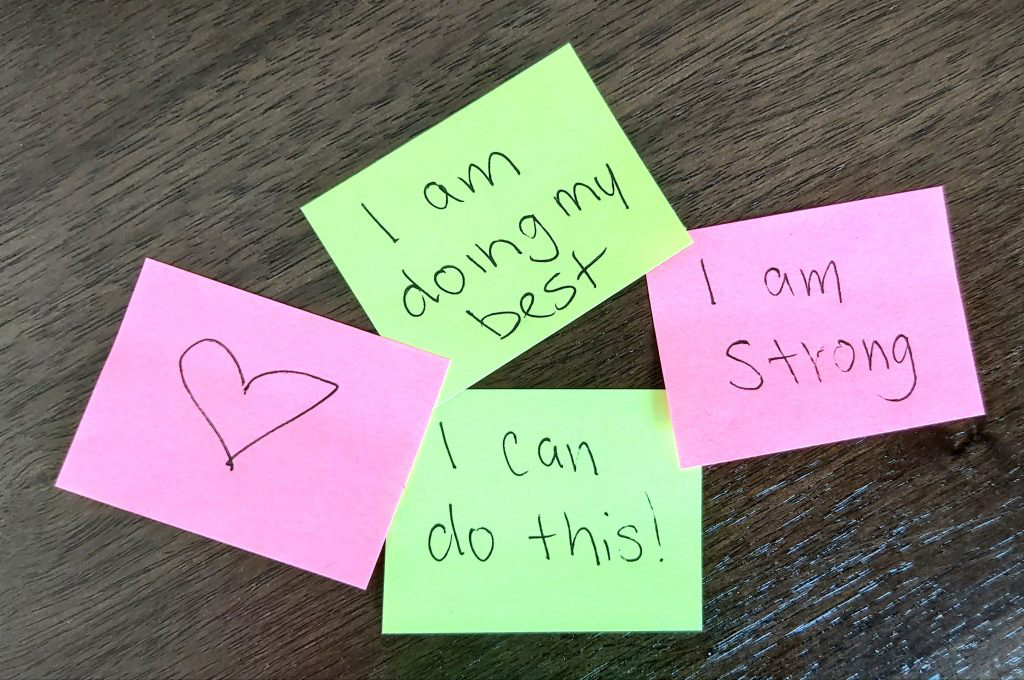
Put these on sticky notes to leave for yourself. Write them in your journal. Pencil them on a napkin and then throw out the napkin. Whatever you need to do. Just say something nice about yourself.
5. Respect your body
Mental health and physical health are so strongly intertwined. As if nourishing yourself on event days wasn’t hard enough, now in this world of virtual events, it can be even worse. Running a full-day online conference from your home means you’re not even getting that event-day step count in, and there’s definitely no wonderful catering team to force a plate of food into your hands when you’re too busy to get yourself some food. Part of the planning of your event should include planning when you will eat and stretch. Wake up 10 minutes early and load yourself up on nutritious desk snacks. When you tell your attendees to go for a break, take two of those minutes to walk around. Or at least do some desk stretches. You’ll feel worlds better.
6. Get some sleep
Don’t laugh. We know, we know. Telling an event planner to sleep, especially leading up to a big event, sounds ridiculous. The pre-event stress can keep us awake at all hours of the night, so while you may not be able to squeeze in your full eight hours of sleep, you can at least make the most of what you do get. Techniques like not looking at your phone for an hour before sleep, reading a book, keeping a regular sleep schedule (even if you’re just in bed and not sleeping) and meditating can all contribute to a more restful sleep.
7. Plan recovery days
Whether or not you took our advice about the sleep, the day after an event, once the post-event high has worn off, can leave a planner feeling completely exhausted. When planning your event, look ahead in your calendar to the day after. Block. It. Off. It is the single kindest thing you can do for yourself. Spend the day resting your brain and body so that when you get back to work, you can really give it your all.
Whether you’re still navigating the virtual event landscape or are emerging into the brave new world of hybrid events, we’re here for you. Check out Georgian’s mental health and well-being resources.
And don’t forget, if you need a hand with your online meeting, we offer virtual meeting packages!