
Train for a career in software development and systems analysis
Computer Programming and Analysis Ontario College Advanced Diploma, Co-op program
Learn to code using in-demand programming languages. Strong focus on analysis and business integration. Complete a significant client project.
Program information
Program description
The three‑year Computer Programming and Analysis program prepares you to become adaptable, entry-level developers and systems analysts by combining technical foundations with hands‑on experience. You progress from core programming and web development into advanced topics such as artificial intelligence, cloud computing services, application security, game and simulation programming. Learning is anchored in real projects including capstone courses, applied problem-solving, and two co-op work terms, giving you the opportunity to build software for diverse platforms, while developing strong professional, analytical, and system design skills. You emerge with a versatile portfolio, practical experience, and the ability to contribute to organizations that rely on innovative, efficient, and intelligent digital solutions.
Intake information
| Start date | Campus |
|---|---|
| Fall 2027 | Barrie |
| Winter 2028 | Barrie |
Tuition and fees
- Visit our tuition and fees page for detailed information on the cost to attend Georgian.
- Review additional program-specific fees for this program.
- Check the Bring Your Own Device requirements for this program.
- You can afford this! Explore OSAP as well as awards, scholarships and bursaries to help you pay your way to graduation.
Work-integrated learning
- This program includes a co-op work term component where you’ll gain experience in a workplace related to your field of study.
- Learn about types of work-integrated learning at Georgian.

What are the admission requirements for the Computer Programming and Analysis program?
Computer Programming and Analysis admission requirements
- Ontario Secondary School Diploma (OSSD) or equivalent, or mature student status
- Grade 12 English (C or U)
- Any Grade 12 Mathematics (C or U)
Mature students, non-secondary school applicants (19 years or older), and home school applicants may also be considered for admission. Eligibility may be met by applicants who have taken equivalent courses, upgrading, completed their GED, and equivalency testing. For complete details refer to: www.georgiancollege.ca/admissions/academic-regulations/
Pathways
Applicants who have taken courses from a recognized and accredited post-secondary institution and/or have relevant life/learning experience may also be considered for admission; refer to the Credit for Prior Learning website for details:
www.georgiancollege.ca/admissions/credit-transfer/
Additional information
To be successful in this program, students are required to have a personal notebook computer (either PC or Mac architecture) prior to the start of the program that meets or exceeds the following specifications:
- OS: Windows 11
- Processor: Intel Core i5 or AMD Equivalent, 13th Gen or newer
- RAM: 16GB or higher
- Storage: 250GB or higher
- Graphics: Intel HD integrated graphics or equivalent
- Connectivity: Wireless 802.11ax Network Adapter
Note: Machines that run Windows on an ARM or SnapDragon are not supported. Many development programs are not complied to work with that operating system/chipset combination.
Bring Your Own Device (BYOD) requirements
All Georgian College students are required to bring their own device (BYOD) that meets the technology requirements for their program. Having access to a personal laptop that meets your program’s technical requirements will ensure you’re prepared for in-class, online and hybrid learning activities. Students are responsible for the cost, software installation, maintenance and repair of their device.
What career paths can I take in software development and analysis?
Your Computer Programming and Analysis diploma gives you many career opportunities
Graduates of the Computer Programming and Analysis program are prepared for a wide range of entry‑level roles across the software and technology sector. Through exposure to a variety of technologies students are equipped to design, build, enhance, and maintain software applications. Career paths include software developer, full‑stack developer, web application developer, cloud solutions developer, application security developer, database designer/administrator, systems analyst, business analyst, DevOps technician, and QA/software testing specialist. Graduates are also well positioned to contribute to project planning and technical decision‑making within software teams, and to support organizations that rely on innovative, secure, and data‑driven digital solutions.
What courses are included in the Computer Programming and Analysis diploma program?
Course overview
29 Program Courses
1 Communications Course
2 Program Option Courses
4 General Education Courses
2 Co-op Work Terms
Program-specific courses
Semester 1 courses are listed below. For a full list of courses in the program including course descriptions, view the Computer Programming and Analysis program outline.
- COMP 1002 – Web Development Fundamentals
- COMP 1030 – Programming Fundamentals
- COMP 1035 – Networking Essentials
- MATH 1003 – Math for the Computer Industry
- COMM 1016 – Communication Essentials
- Select 1 course from the General Education list during registration.
Your course delivery method(s)
Hybrid
This program has a hybrid delivery method. Some parts are online and other parts are delivered in person. You’ll need to come to campus for part of your program.
Please note, delivery methods are based on planning for the upcoming semester and are subject to change.
Check out our other related programs

Business
Build a solid foundation in business. Valuable hands-on experience to launch your career from here or take advantage of pathways to further studies.

Computer Programming
Learn to code using in-demand programming languages. Design and build applications for desktop, mobile and web. Be job-ready in two years.

Computer Systems Technician – Networking
Five core computer system streams. Cisco Networking Academy partner. One co-op work term. Connections with key employers in the region.
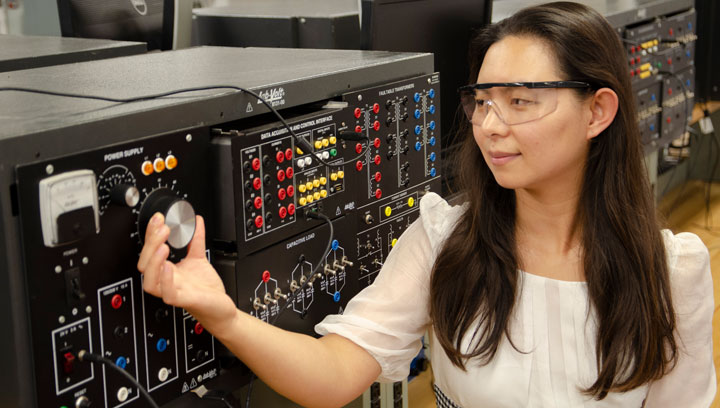
Electrical Engineering Technology
Advance your career possibilities. Benefit from our partnerships within the electricity industry. Be eligible for certification on graduation.
Do you have questions about Computer Programming and Analysis? Contact us!
Thinking about applying to Georgian?
Contact our student recruitment team to explore your study options.
Already applied to Georgian?
Connect with the Office of the Registrar for admissions-related questions.
Are you an international student?
Contact our international recruitment team to learn more about studying at Georgian.
Ways to connect

Attend a virtual information session to learn more about Georgian.
Learn more and RSVP

Take a guided, in-person tour
of our campuses.
Book a campus tour.

Book a phone appointment
with a recruitment specialist.
Connect with a recruiter.

Join our email list for event updates, contest information and more.
Sign up for Georgian updates.